
Soft Washing – Targeted Treatment for Algae and Lichen Growth
Soft washing is an ideal solution for roofs affected by algae, lichen, and light organic staining. This method uses a controlled application of specialised bleach or biocide based solution to break down biological growth at its root without the need for pressure.
On it's own Soft washing is a specialised cleaning method designed to treat roofs affected by algae, lichen and organic staining where heavy moss build-up is not present. This approach is particularly effective for roofs that require a gentler treatment, delivering visible improvement without mechanical stress or surface abrasion. Combined with Manual Moss Removal - Scrapping can be also suitable for roofs with heavy moss build-up.
Controlled Chemical Action with Minimal Physical Impact
Unlike pressure-based methods, soft washing works through the controlled application of biocidal solutions that penetrate organic growth and neutralise it at a cellular level. The process does not rely on force, making it ideal for roofs where preserving surface integrity is essential.The solution is evenly applied across the roof surface, allowing it to dwell and break down algae, lichen, and staining without disturbing tiles or forcing water beneath the roof covering.
Targeted Treatment for Long-Term Results
Soft washing is designed to treat the cause of organic contamination rather than just the visible symptoms. While results continue to improve over time as weather naturally washes away residues, the biocidal treatment continues working in the background to inhibit regrowth.This makes soft washing particularly effective for roofs with light to moderate biological growth, or where ongoing protection is a priority over immediate cosmetic results.
A Safer Alternative for Delicate or Weathered Roofs
Because it avoids high pressure and mechanical agitation, soft washing is often the preferred method for older, weathered or more delicate roofing materials. It provides an effective clean while significantly reducing the risk of damage, making it a reliable long-term solution for maintaining roof health.
Why Soft Washing Is an Effective Solution for Roof Cleaning
Effective Treatment for Algae, Lichen and Organic Growth.
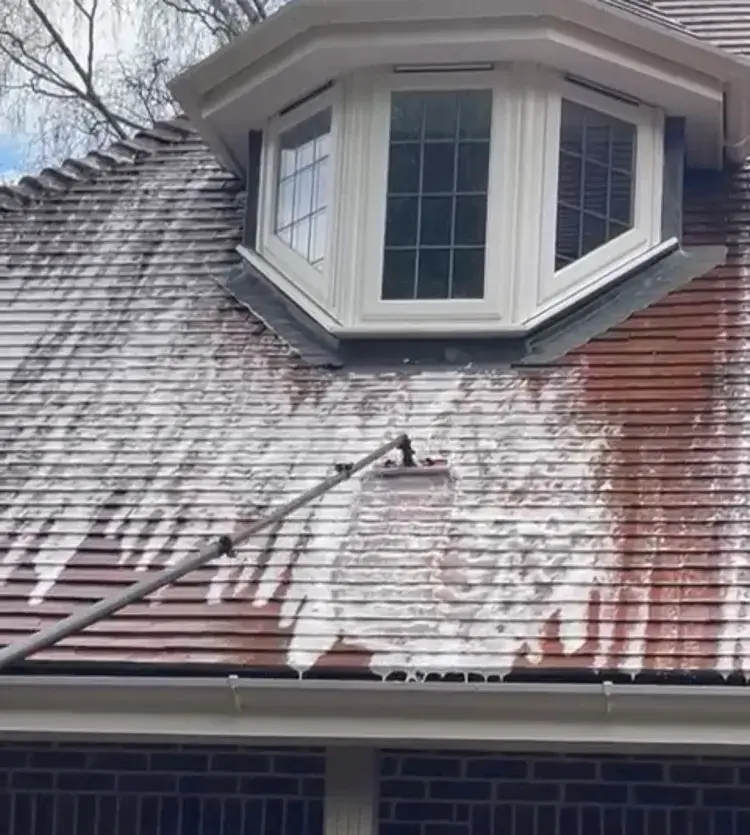
Soft Washing Roof – Two Complementary Treatment Approaches
In most cases, we use both treatments together to achieve the best and most consistent results. The initial application targets visible contamination, while the follow-up treatment ensures long-term protection and prevents rapid regrowth.
Bleach-Based Cleaning for Immediate Results
This method uses a controlled bleach-based solution (sodium hypochlorite) to break down algae, lichen and surface staining. It delivers fast, visible improvement by cleaning the tiles effectively and restoring their appearance.
Biocide Treatment for Long-Term Protection
Biocide application focuses on eliminating remaining spores and microscopic organic growth. Rather than providing instant visual change, it works gradually to prevent regrowth and extend the overall cleanliness of the roof.
Professional Soft Washing on Roof in Action
Safe, controlled and highly effective roof cleaning — delivered by trained specialists using industry-approved equipment.
Preparation and Equipment Setup
Every roof cleaning project begins with careful preparation. We assess access points and ensure all necessary safety measures are in place to protect both your property, environment and our team. As part of this stage, we set up our scaffold tower and prepare our soft washing equipment, including battery-powered pump systems and telescopic brushes. This allows us to work efficiently, safely, and with minimal disruption to your home.
Roof Cleaning Process Using Soft Washing
The soft washing process relies on a chemical-based cleaning method rather than high water pressure. A low-strength sodium-based solution is applied directly to the roof surface using specialist equipment, including a battery-powered pump and telescopic brushes. The solution is worked into the surface to break down organic matter such as moss, algae, and lichen. Thanks to added surfactants, the mixture forms a foam that clings to the roof for longer, allowing the active ingredients to work effectively while reducing the overall amount of product required. After sufficient dwell time, the treated areas are gently rinsed using a standard garden hose, removing loosened contamination without stressing the roof structure.
Final Rinse, Biocide Application & Site Clean-Up
Once the cleaning process is complete, a professional biocide treatment is applied to the roof surface. This treatment targets remaining organic spores and helps prevent the regrowth of moss, algae, and lichen over time. The biocide continues to work after application, extending the cleanliness of the roof and supporting long-term protection.As part of the final stage, all surrounding areas are thoroughly cleaned. Debris is removed, gutters, soffits and fascia are cleaned , and the site is left clean and tidy. This ensures not only a visibly improved roof, but also a safe, well-finished property with no mess left behind.
Soft Washing Roof Process
Our proven cleaning process delivers fast, visible results without compromising the integrity of your roof.
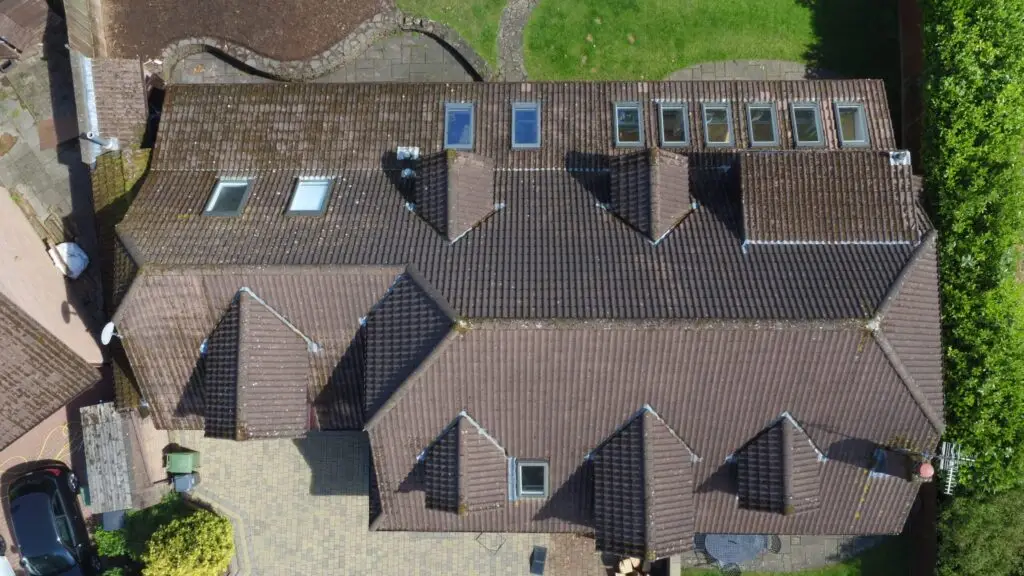
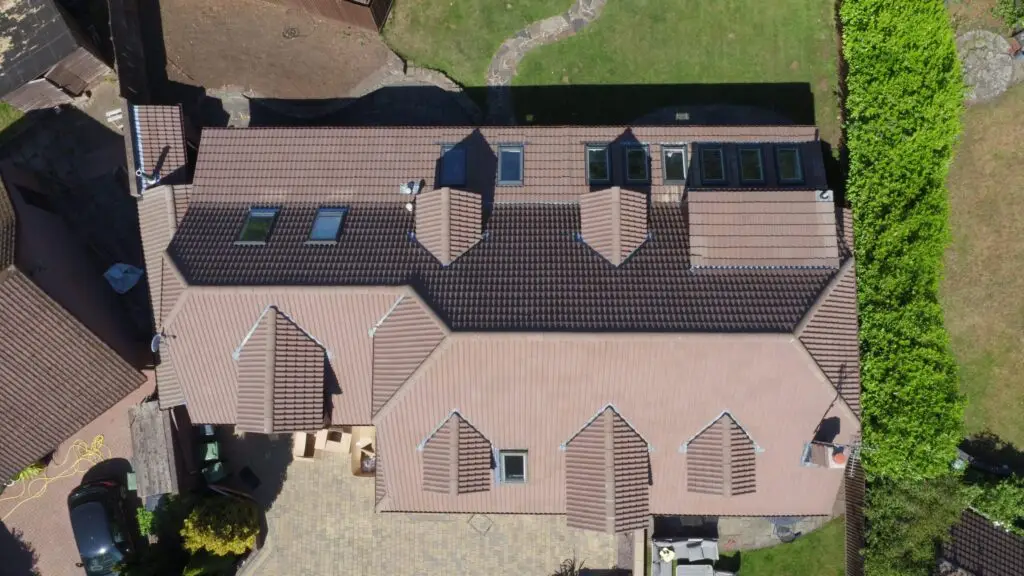
Frequently Asked Questions – Soft-Washing for Roofs
Not sure if pressure washing is right for your roof? These frequently asked questions explain how the process works and what you can expect.
Is pressure washing safe for my roof?
Yes — when carried out correctly, soft washing is a safe and effective method for cleaning your roof.
Soft washing uses low-pressure application combined with specialised cleaning solutions, meaning there is no aggressive force that could damage tiles or roofing materials. The process is designed to remove moss, algae, and organic growth without compromising the structure of the roof.
Before any work begins, the roof is assessed to ensure it is suitable for low-pressure washing method. If a roof is found to be too fragile or unsuitable for pressure washing – an alternative approach is recommended, soft washing is one of the safest and most controlled ways to clean a roof.
What is the difference between pressure washing and soft washing?
Pressure washing removes moss, dirt and organic build-up using controlled water pressure, delivering immediate and visible results.
Soft washing, on the other hand, is a chemical-based process that relies on biocidal solutions — typically sodium hypochlorite combined with surfactants — to break down organic staining and inhibit biological growth over time.
While soft washing is highly effective at treating algae, lichen and surface staining, it does not physically remove heavy moss growth. For this reason, moss usually needs to be manually removed before or alongside chemical treatment. The biocide then continues to work over time, preventing regrowth and improving the long-term appearance of the roof.
In practice, the most effective results are often achieved by combining methods:
manual moss removal where required, followed by controlled cleaning and a biocide application to protect the roof long term.
Can soft-washing damage roof tiles?
When carried out correctly, soft washing does not damage the roof. It is specifically designed to be a gentle alternative to pressure cleaning.
The process uses low-pressure application and carefully diluted cleaning solutions, which means there is no force capable of cracking tiles, lifting edges, or disturbing the roof structure. However, as with any cleaning method, it must be applied appropriately.
Damage can occur only if:
the roof is already severely deteriorated or structurally compromised
incorrect chemical strengths are used
the method is applied without proper assessment or experience
That’s why a full inspection is always carried out beforehand. If a roof is found to be too fragile or unsuitable, a different, safer approach is recommended. When done professionally, soft washing is one of the safest and most controlled ways to clean a roof.
Is Soft Washing suitable for all roofs?
Yes, soft washing is safe for any roof that is in sound structural condition. The method is highly flexible, as different chemical strengths can be used depending on the level of contamination and the type of roof surface.
Longer dwell times can be applied to achieve more effective results. In cases where the roof is particularly fragile and an immediate visual result is not required, an alternative approach can be used — applying a biocidal treatment only, which gradually eliminates organic growth over the following weeks.
This allows the cleaning process to be tailored to the roof’s condition while always prioritising safety and long-term protection.
How long do the results of soft-washing last?
Results can last several years, especially when followed by a biocide treatment. The exact duration depends on environmental factors such as shade, moisture, and nearby vegetation. Our service is ALWAYS combined with Biocide Treatment to extend the results as long as possible.
Does soft washing effectively remove moss, algae, and lichen?
Yes, soft washing is highly effective for removing organic growth such as algae and light moss. However, when dealing with heavy moss buildup, manual scraping becomes necessary, and the two methods are often used together. This combined approach allows us to remove thick growth safely while avoiding the risks associated with high-pressure cleaning.
In all cases, the process is completed with a biocidal treatment. This final step continues working over time, eliminating any remaining organic matter and helping to prevent regrowth for years after the initial clean.
Will soft-washing cause leaks?
No — soft washing will not cause leaks when carried out correctly.
The process uses low-pressure application and does not force water under tiles or into roof structures. Unlike high-pressure cleaning, soft washing relies on controlled chemical action rather than water force, making it a much safer option for most roofs.
Before any work begins, the roof is assessed to ensure it is structurally sound. If there are pre-existing issues such as damaged tiles or compromised areas, these are identified in advance and taken into account. When performed by professionals, soft washing does not cause leaks and is considered one of the safest roof cleaning methods available.
Do I need to be at home during the service?
No. As long as access is available and arrangements are confirmed, the work can be completed without you being present.
How long does Soft Washing take?
Most residential roofs are completed within couple of hours to one day, depending on size, access, and the level of contamination.
Is roof soft washing messy?
Soft washing is not messy when carried out professionally.
The process is carefully controlled using low-pressure equipment and targeted application methods. Any runoff is managed, surrounding areas are protected, and all residue is cleaned up once the treatment is complete. While some water and organic debris are released during the process, it is contained and cleared away as part of the service.
When done correctly, soft washing leaves your roof clean and your property tidy — without the mess often associated with high-pressure cleaning.
When the Roof Is Structurally Sound but Sensitive
Soft washing is ideal for roofs that are in good overall condition but may be too delicate for aggressive cleaning methods, such as older tiles or surfaces showing early signs of wear.
When Pressure Washing Is Not Advisable
In cases where pressure washing could risk tile movement, water ingress, or surface damage, soft washing provides a much safer alternative while still delivering excellent results.
Roofs with heavy Moss buildup and Hidden Structural Issues
If the primary issue is heavy surface contamination, a combination of manual scraping and soft washing is the most effective and safest approach. Thick moss buildup can often conceal underlying defects such as cracked tiles or weakened areas that are not visible during an initial inspection. By carefully removing the bulk of the growth first and following with soft washing, we can safely expose and address these hidden risks without subjecting the roof to unnecessary pressure. This method ensures both thorough cleaning and protection of the roof’s structural integrity.
When a Cleaner Finish Is Needed Without Structural Risk
Soft washing offers a balance between effectiveness and protection, making it the preferred option when achieving a clean appearance must not compromise the integrity of the roof.
When Soft-Washing Is the Right Choice
Soft washing is the ideal solution when protecting the condition of the roof is just as important as achieving visible results. It offers a safe, controlled way to remove organic growth without putting unnecessary stress on roofing materials.