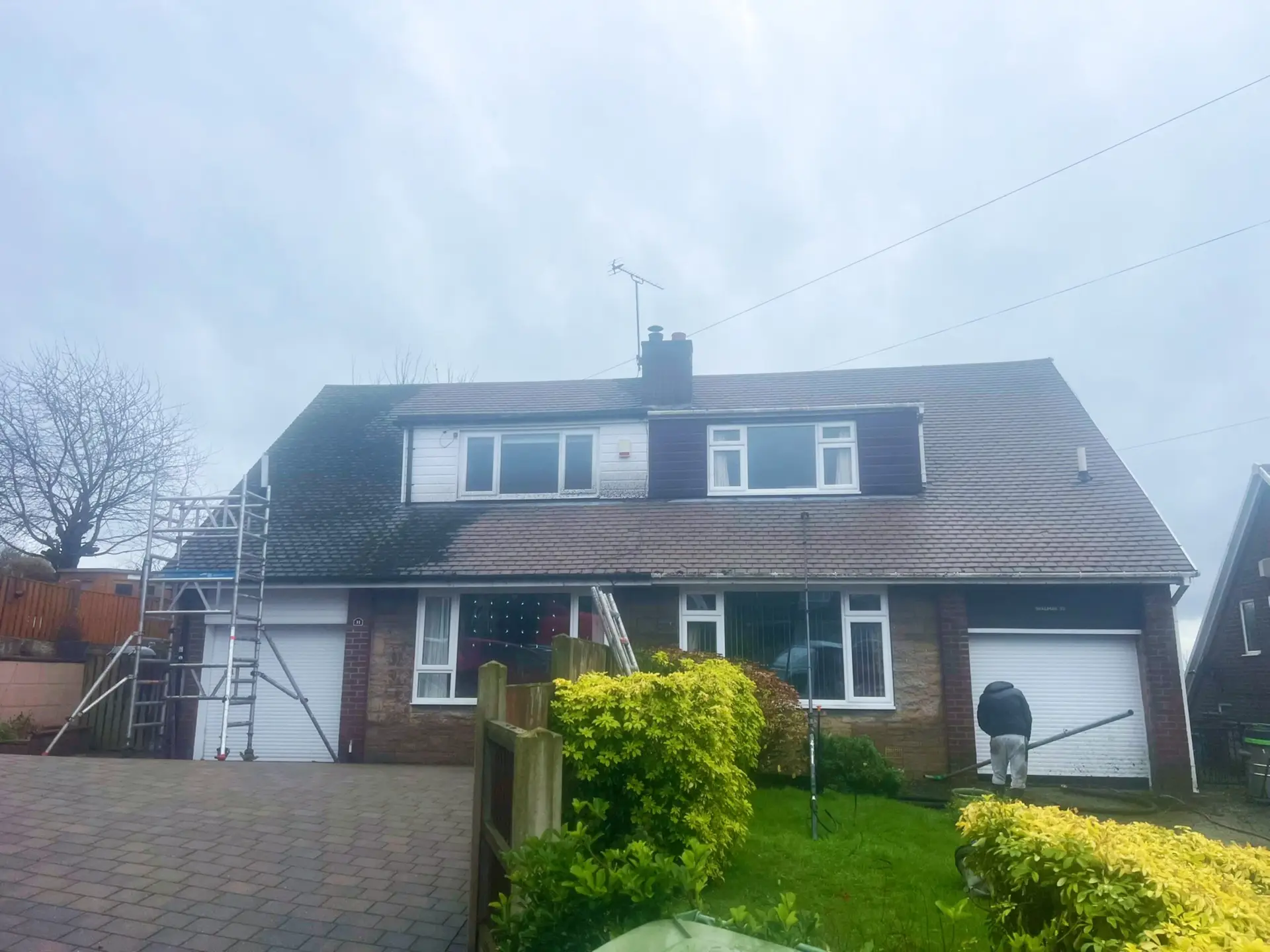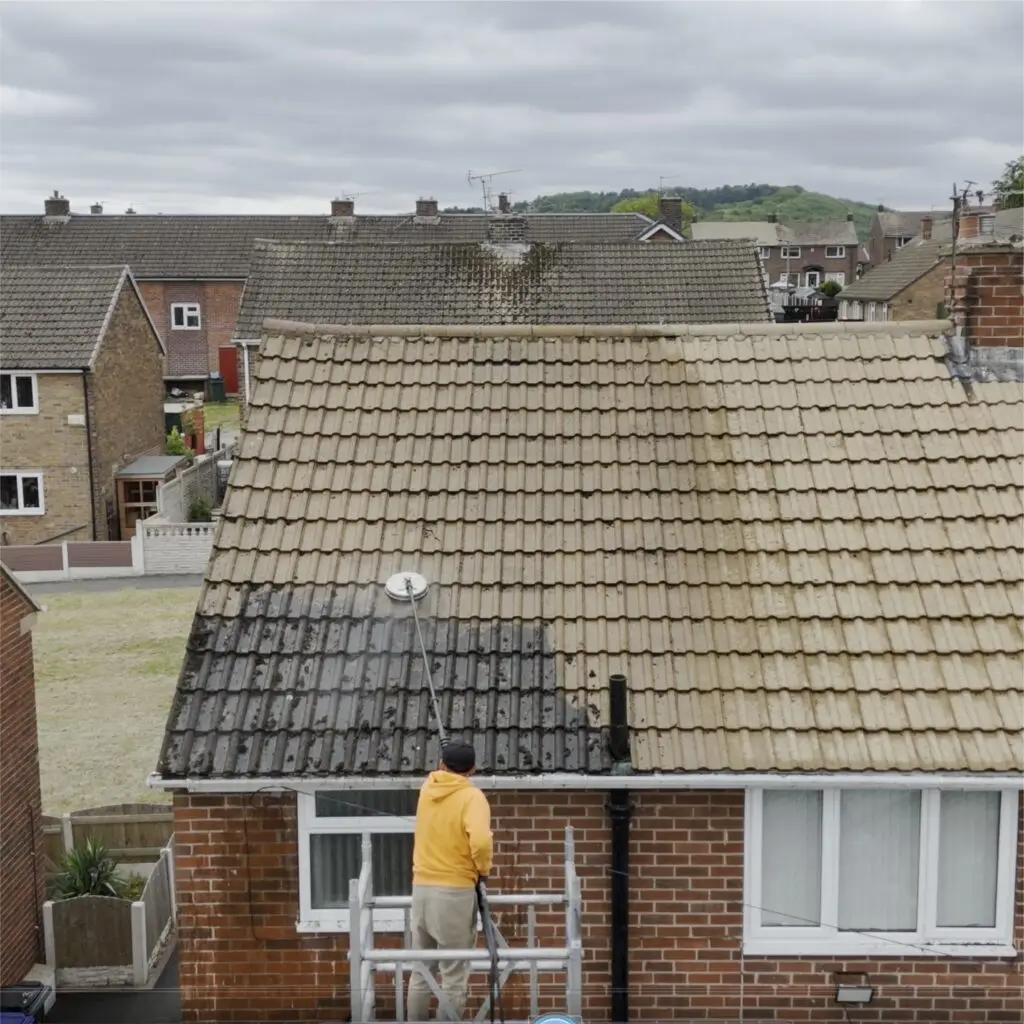
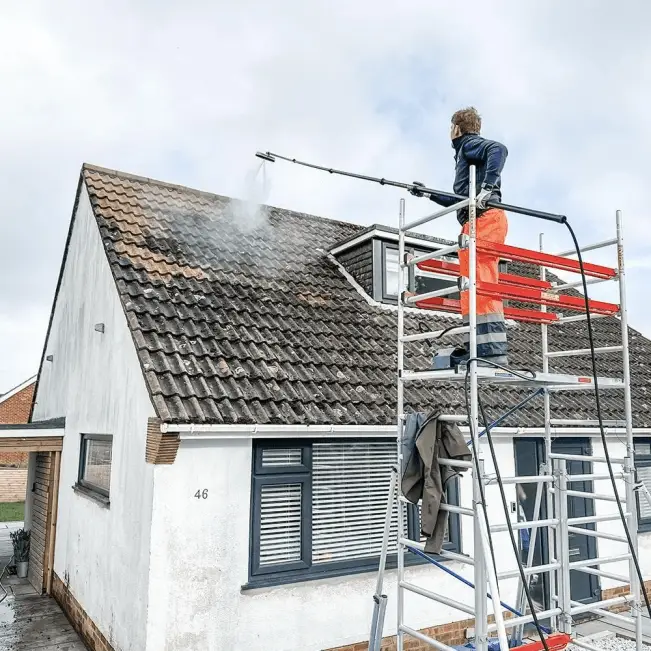
Once the site has been properly prepared and all safety measures are in place, we move on to Step 2: the roof cleaning procedure itself. This is the most visible and technically demanding stage of the entire process, where experience, method selection, and attention to detail make the biggest difference to both results and roof longevity.
At this stage, there is no single universal method that works for every roof. The correct approach depends on several factors, including the roofing material, age of the tiles, level of biological growth, previous treatments, roof pitch, and surrounding environment. Our role is to assess these variables and apply the most effective and safest combination of techniques for your specific property.
Tailored Method Selection, Not a One-Size-Fits-All Approach
Before any cleaning begins, our team confirms the chosen method or combination of methods agreed during the inspection stage. In many cases, effective roof cleaning involves more than one technique applied in a controlled sequence.
The most commonly used methods include:
manual moss removal (scraping)
low-pressure or controlled pressure washing
soft washing
biocide treatment only
Each method serves a specific purpose, and when used correctly, they complement one another rather than compete.
For example, heavily moss-covered roofs often require manual removal first to prevent excessive mess and uncover what is hidden under the coat of moss. In contrast, lightly soiled roofs with algae staining may respond best to soft washing, with minimal physical disturbance.
Working Systematically Around the Roof
The roof cleaning procedure is carried out in a structured and methodical manner, never rushed or random. We typically work:
section by section
from the rear of the property towards the front
from ridge lines down towards the eaves
This approach ensures:
consistent results
controlled debris management
reduced risk of contamination to cleaned areas
Our teams usually operate in pairs, with clearly defined roles. One technician focuses on cleaning the roof surface, while the second manages debris removal, ground cleanliness, and ongoing safety checks. This teamwork allows us to maintain efficiency without compromising care.
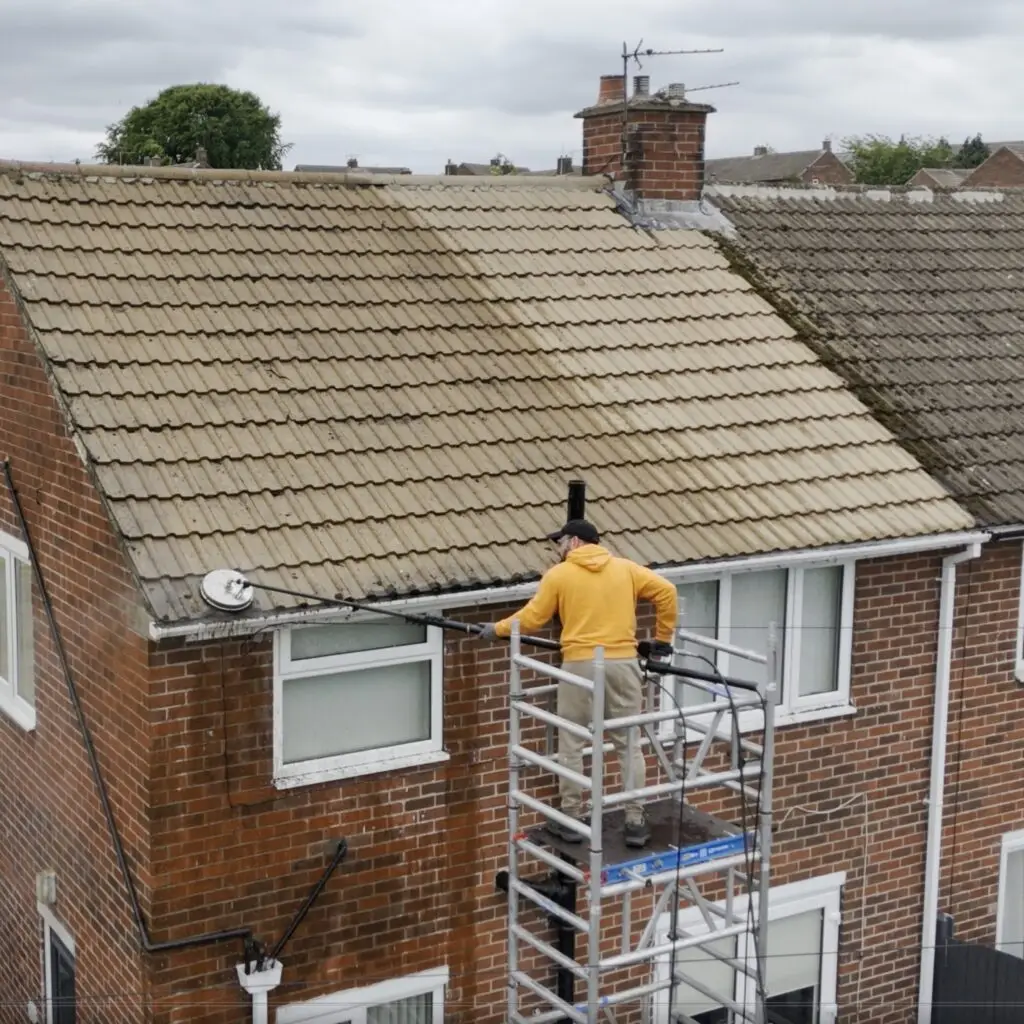
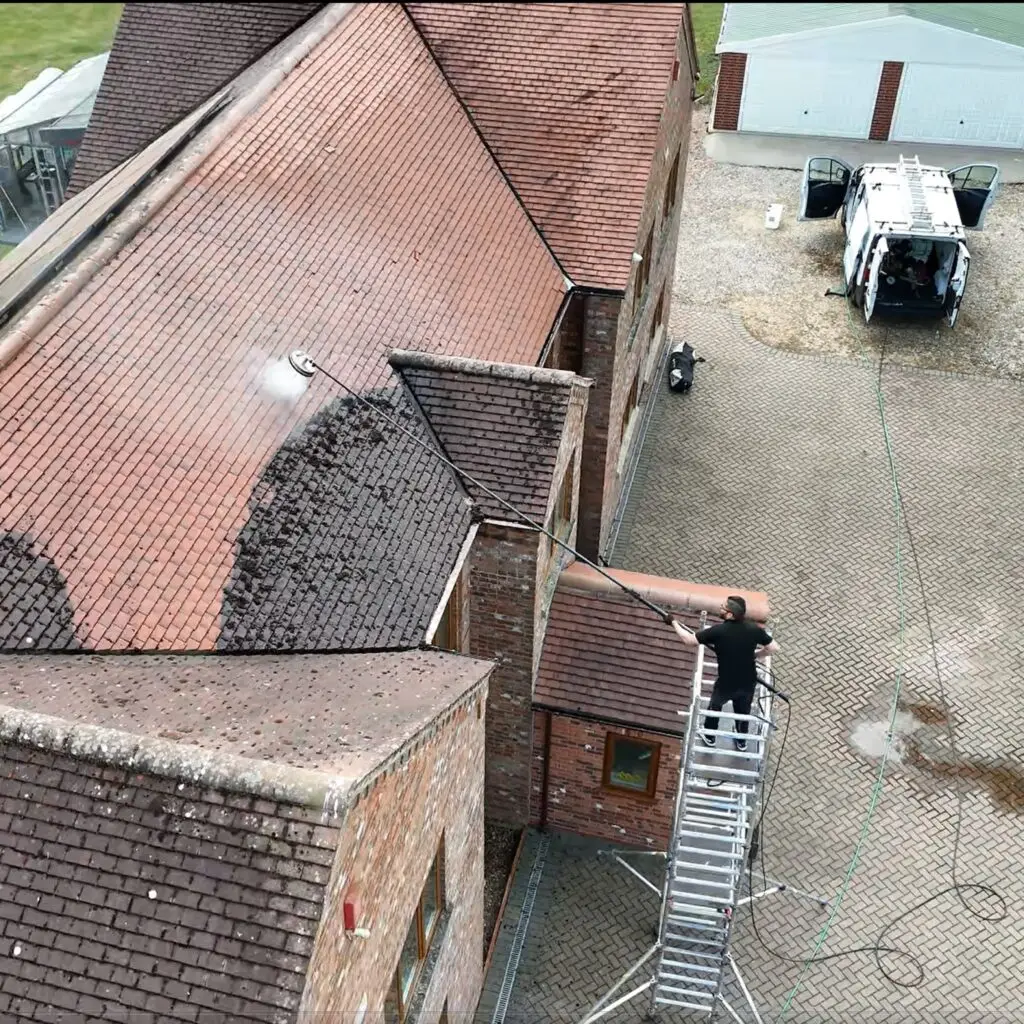
Manual Moss Removal: Precision Before Power
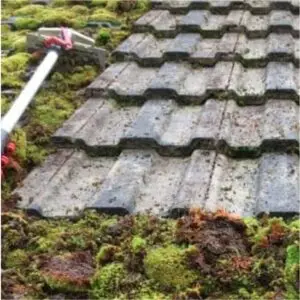
Where moss growth is significant, manual removal is often the first active stage of cleaning. Using specialist tools shaped to match roof tile profiles, moss is carefully scraped away without damaging the surface of the tiles.
This method:
minimises mess
reduces water usage
prevents moss from being driven into gutters
allows close inspection of the roof condition as work progresses
Contrary to common belief, manual scraping is not aggressive when performed correctly. In fact, it is often the safest option for older or more fragile roofs.
All removed material is collected immediately and safely disposed of, rather than left to accumulate around the property.
Controlled Pressure Washing (When Appropriate)
Pressure washing is not automatically applied to every roof. When used, it is done with strict control over pressure levels, angles, and distance from the surface.
This technique is suitable for:
durable concrete tiles in good condition
roofs with heavy surface soiling after moss removal
situations where a deep clean is required prior to treatment
We never use excessive pressure that could:
erode tile surfaces
strip protective coatings
force water under tiles
Instead, pressure is adjusted to the minimum level required to achieve effective cleaning while preserving the integrity of the roof.
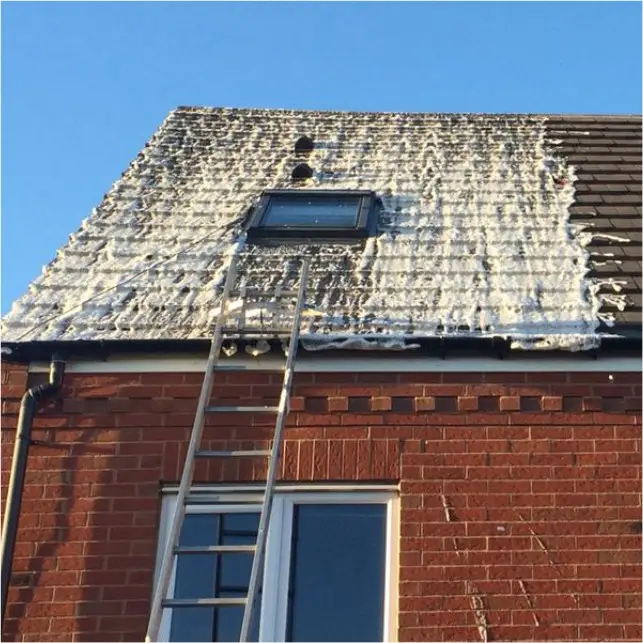
Soft Washing: Low Impact, Long-Term Results
Soft washing is one of the most valuable techniques in modern roof cleaning. Rather than relying on force, it uses specialist cleaning solutions to break down organic growth such as algae, lichen, and moss at a molecular level.
The benefits of soft washing include:
minimal physical stress on tiles
effective treatment of staining
continued improvement over time
suitability for delicate or older roofs
Soft washing is often applied after manual or pressure-based cleaning, ensuring that any remaining spores are neutralised and regrowth is slowed significantly.
Managing Water Flow and Runoff
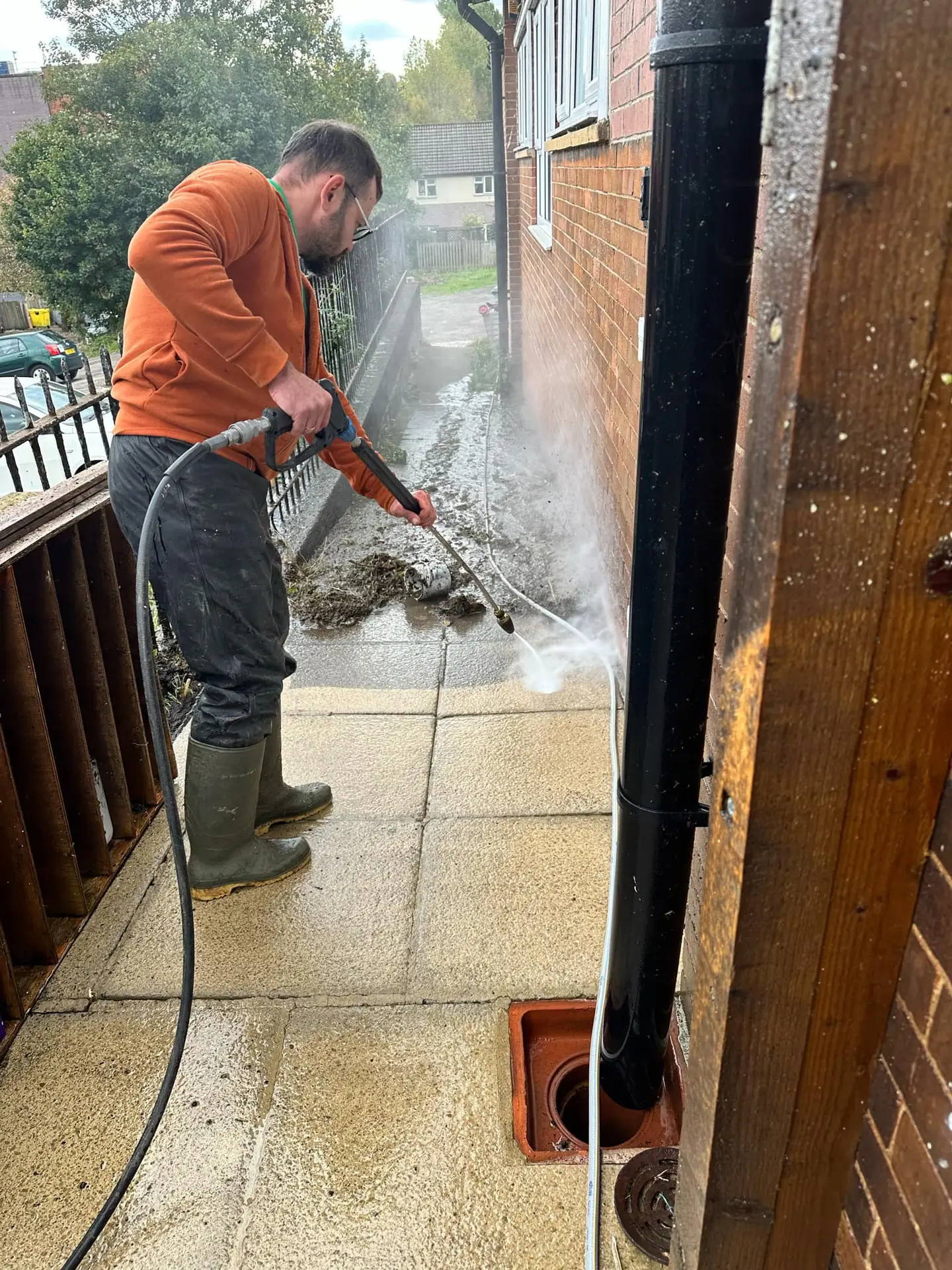
Throughout the cleaning procedure, careful attention is paid to water control. Downpipes may be temporarily blocked or filtered to prevent moss, silt, and debris from entering drainage systems.
This protects:
gutters and drains
surrounding landscaping
neighbouring properties
Any runoff is directed and managed responsibly, keeping the site clean and compliant with environmental best practices.
Continuous Visual Inspection During Cleaning
One of the advantages of a professional roof cleaning procedure is the ongoing inspection that takes place during the work itself. As debris is removed and tiles are exposed, we can identify:
cracked or slipped tiles
deteriorating mortar
early signs of water ingress
areas requiring repair or future attention
While roof cleaning is not a repair service, identifying these issues early can help homeowners address small problems before they develop into costly damage.
Cleanliness Beyond the Roof Surface
A professional roof cleaning procedure does not stop at the tiles themselves. Equal importance is placed on:
keeping walls and windows clean
preventing splatter or staining
maintaining a tidy work area throughout the job
Our team continually clears debris from protective coverings and surrounding areas, ensuring the property remains presentable at every stage.
Why Professional Execution Matters
Roof cleaning is often underestimated as a simple cosmetic task. In reality, incorrect methods or poor execution can lead to:
damaged tiles
reduced roof lifespan
water ingress
unnecessary mess and disruption
By following a structured, professional procedure, we ensure that cleaning enhances the roof rather than compromises it.
This step is not about speed — it is about precision, judgement, and control.
Preparing the Roof for the Final Treatment Stage
Once the roof cleaning procedure is complete, the surface is left in a good condition for the final stage of the process, which typically involves the application of a biocide or protective treatment.
A properly cleaned roof allows treatments to:
bond effectively
penetrate porous surfaces
deliver longer-lasting results
A Crucial Step in Long-Term Roof Care
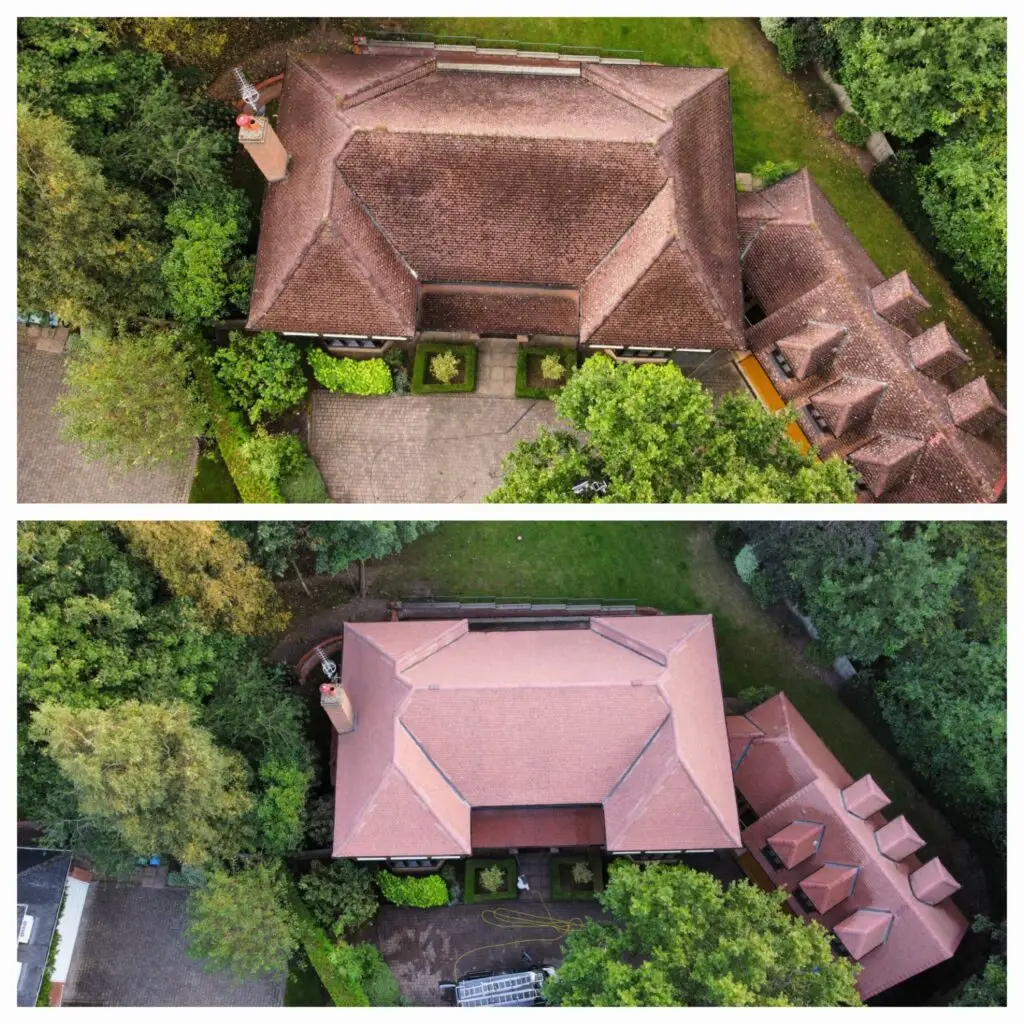
Step 2 of the roof cleaning process is where expertise truly shows. It transforms a roof from being biologically compromised and visually tired into a clean, stable surface ready for protection.
When carried out correctly, professional roof cleaning:
restores appearance
reduces moisture retention
slows future growth
supports the overall health of the roof structure
This is not just about how the roof looks today — it is about how it performs in the years to come.