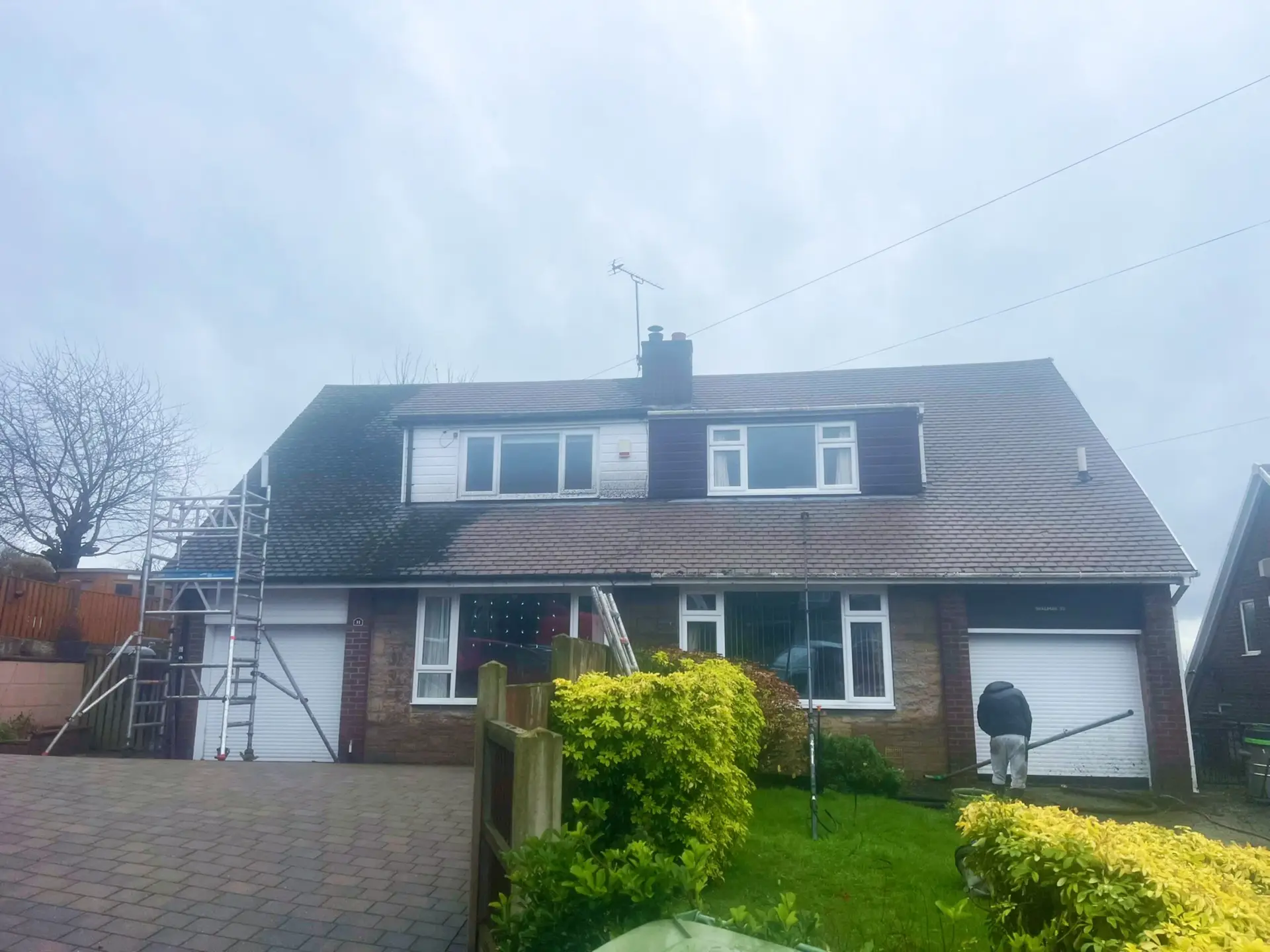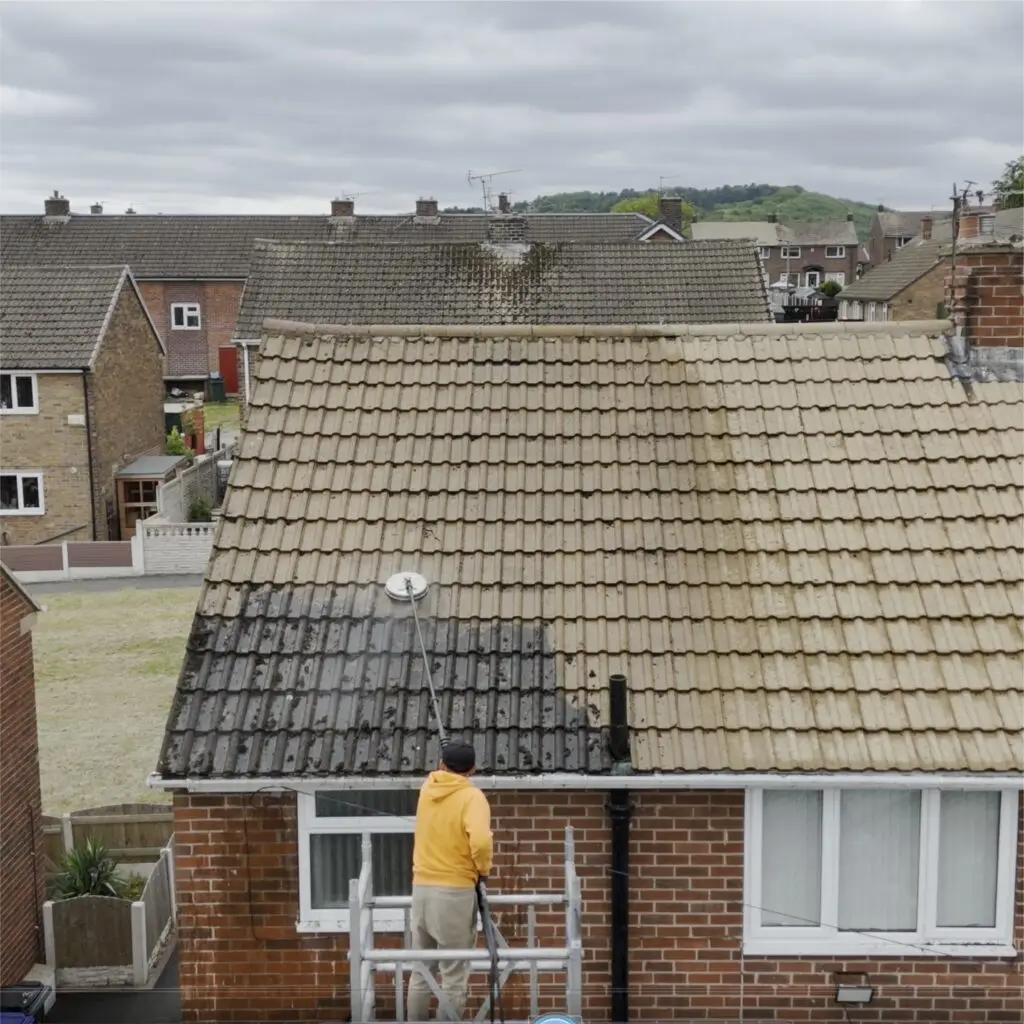
After the roof has been thoroughly cleaned and the surface fully exposed, we move into the final and most protective stage of the process: biocide treatment.
This step is not about immediate visual impact alone, but about securing the results of roof cleaning for the long term and preventing biological regrowth at its source.
Even after the most careful cleaning, microscopic organic spores remain embedded within the pores of roof tiles. These spores are invisible to the naked eye, yet they are responsible for the rapid return of moss, algae and lichen if left untreated. Biocide treatment addresses this issue directly, ensuring the roof remains cleaner for significantly longer.
Why Biocide Treatment Is Essential After Cleaning
Roof cleaning removes visible growth, debris and surface contamination, but it does not fully eliminate biological activity within the tile structure itself. Roof tiles are naturally porous, and it is within these pores that spores survive and regenerate when moisture and shade return.
Biocide treatment works at a deeper level, neutralising organic life forms that cleaning alone cannot fully remove. This transforms roof cleaning from a short-lived cosmetic improvement into a long-lasting protective process.
How Professional Biocide Treatment Is Applied
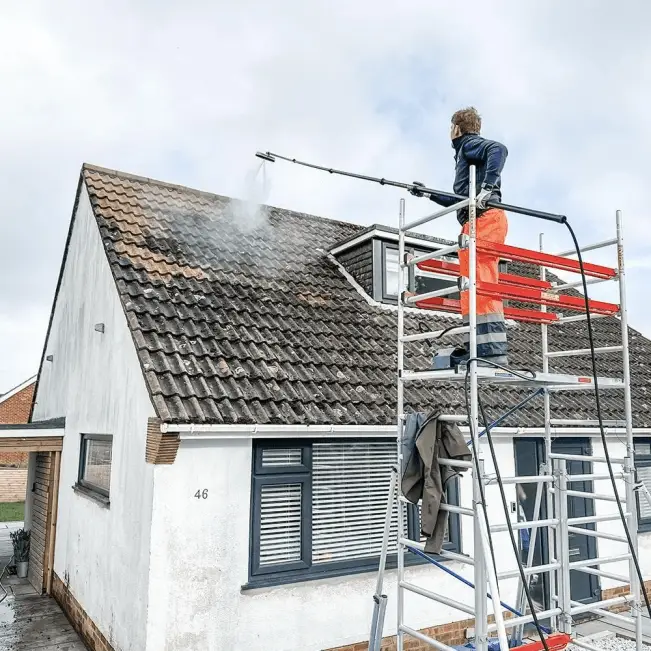
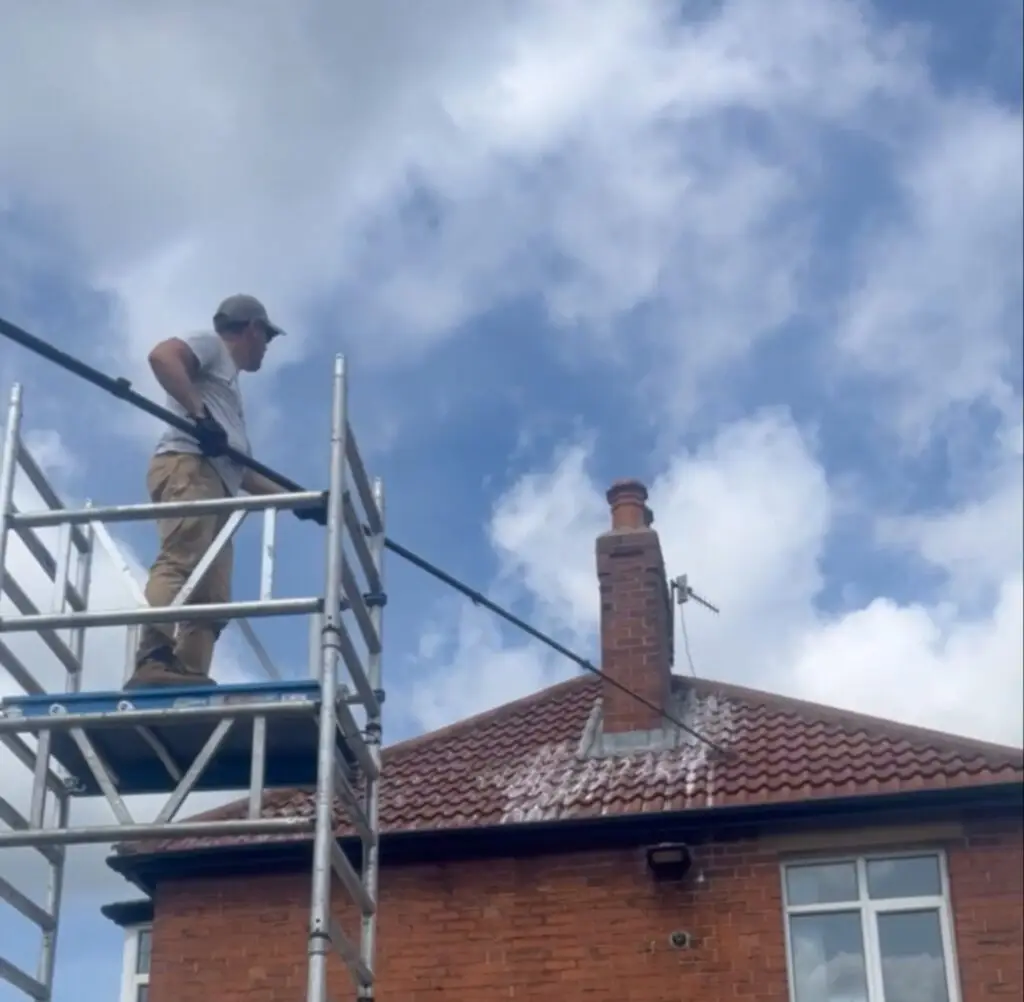
Unlike many generic spray-on treatments, professional biocide application is carried out using a brush-assisted method. The solution is carefully applied and worked directly into the surface of the tile, allowing it to penetrate pores and textured areas where spores typically reside.
This brushing action is deliberate and controlled. It ensures even coverage and improves absorption without relying on excessive quantities of chemical solution. The aim is effectiveness through precision rather than volume
.
The Role of Surfactants and Foam Formation
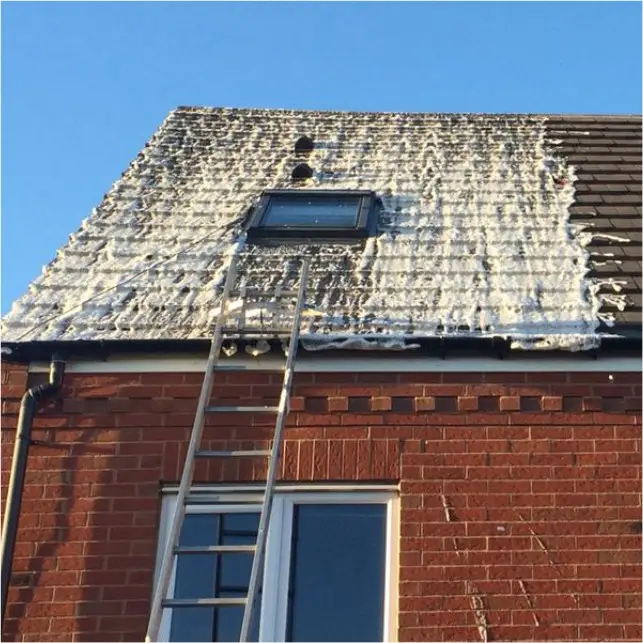
A critical component of professional biocide solutions is the presence of surfactants. These surfactants reduce surface tension, allowing the solution to spread evenly and cling to the roof surface rather than running off immediately.
As a result, the biocide forms a controlled foam layer during application. This foam plays an important role by keeping the active ingredients in contact with the tiles for longer, improving penetration and effectiveness. Because the solution stays in place rather than being lost to runoff, significantly less product is required to achieve the desired result.
This reduced chemical usage directly lowers the environmental impact of the treatment while maintaining high performance. It is a more responsible and efficient approach compared to uncontrolled spray applications.
A Process Reserved for Professionals
Biocide treatment at this level cannot be carried out correctly without professional training and equipment. Correct product selection, dilution ratios, application technique and roof access methods are all critical to both safety and effectiveness.
Improper application can lead to poor results, unnecessary chemical use, or potential damage to surrounding areas. For this reason, professional biocide treatment is not a DIY procedure and should only be performed by trained specialists who understand roof materials and biological behaviour.
How Biocide Treatment Delivers Long-Term Results
The effectiveness of biocide treatment lies not in instant visual change, but in long-term biological control. Once applied, the solution begins working at a microscopic level, neutralising remaining spores and disrupting the conditions required for regrowth.
Over time, organic residues on the roof surface undergo oxidation. This natural process causes staining and discolouration to gradually fade, often continuing for months after application. Rainfall and weathering activate and support this process, allowing the roof to continue improving visually without further mechanical cleaning.
This slow, controlled action is precisely what makes biocide treatment so effective over extended periods.
How Long Does Biocide Protection Last?
When applied correctly as part of a professional roof cleaning process, biocide treatment typically remains effective for three to five years. The exact duration depends on environmental factors such as shade, moisture levels, surrounding vegetation and roof orientation, but in most cases the protection is long-lasting and reliable.
This extended effectiveness significantly reduces the frequency of major roof cleaning interventions.
Reapplication Without Re-Cleaning
One of the most practical advantages of professional biocide treatment is that, in many cases, reapplication does not require the roof to be cleaned again. If the roof remains structurally clean and free from heavy moss build-up, a maintenance biocide treatment can be applied directly.
This approach:
preserves the condition of the tiles
avoids unnecessary mechanical stress
saves the client money by eliminating repeat cleaning costs
It is a cost-effective and roof-friendly maintenance strategy that supports long-term care rather than repeated restoration.
A Smarter, More Sustainable Approach to Roof Care
By reducing chemical volume through foam-based surfactant technology, avoiding aggressive cleaning methods and extending maintenance intervals, biocide treatment supports a more sustainable approach to roof care.
The roof remains cleaner for longer, requires fewer interventions and retains its integrity over time. This benefits both the property and the environment.
Completing the Roof Cleaning Process Properly
Step 3 completes the professional roof cleaning system. Without it, the process would remain incomplete, leaving the roof vulnerable to rapid regrowth despite careful cleaning.
Together, the three stages work as a unified strategy: preparation protects the property, cleaning restores the surface, and biocide treatment secures the result for years to come.
This final step ensures the roof is not only clean today, but protected well into the future.